

Asset Management for Multifamily Investors: How Performance Is Built After the Purchase
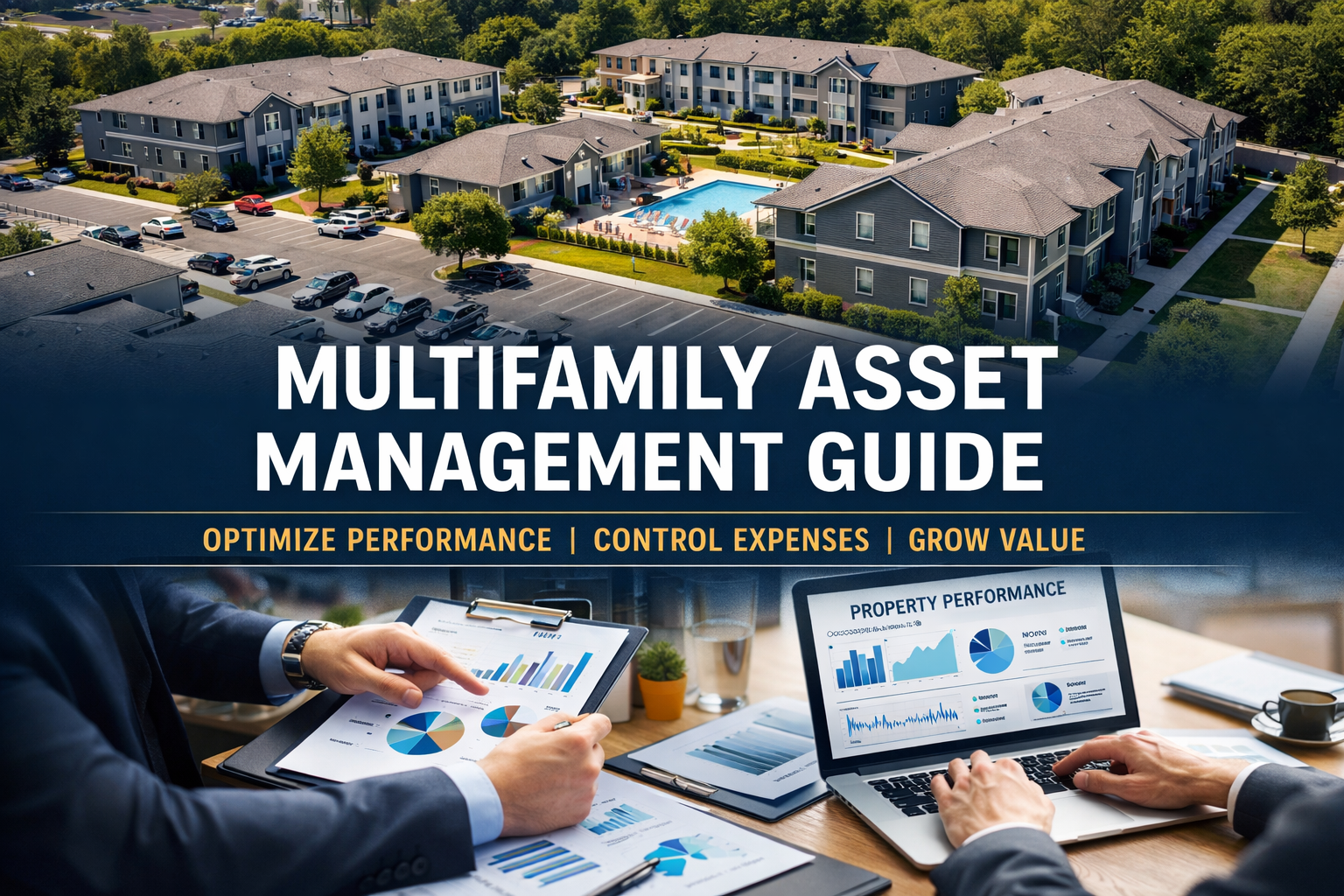
Many investors focus heavily on acquiring a property — underwriting, financing, and closing the deal.
But experienced operators know the truth:
Real value in multifamily investing is created after acquisition.
Asset management is the discipline that turns an average acquisition into a strong long-term performer. Without it, even good deals can underperform.
This guide outlines how professional investors manage multifamily assets to protect capital, improve performance, and build durable portfolios.
What Asset Management Really Means
Asset management is not property management.
Property management handles daily operations:
- Leasing
- Maintenance requests
- Rent collection
- Tenant communication
Asset management operates above that layer.
It focuses on:
- Financial performance
- Strategic improvements
- Budget control
- Rent positioning
- Expense management
- Value creation
- Investor returns
An asset manager ensures the property performs according to the investment plan.
The First 90 Days Matter Most
The period immediately after acquisition often determines success.
Professional asset managers focus on:
Operational Review
- Lease audits
- Vendor contract review
- Expense verification
- Maintenance backlog evaluation
- Staff assessment
Immediate Stabilization Steps
- Correct under-market rents where possible
- Improve leasing processes
- Address deferred maintenance
- Improve tenant communication
- Tighten expense controls
Strong early execution prevents small problems from becoming expensive ones later.
Managing Property Managers Effectively
One of the biggest investor mistakes is assuming property managers will automatically protect performance.
Strong asset management includes:
- Weekly or bi-weekly performance calls
- Occupancy tracking
- Leasing velocity monitoring
- Maintenance response tracking
- Budget vs. actual reviews
- Marketing strategy adjustments
The manager runs operations.
The asset manager ensures results.
Tracking the Right Performance Metrics
Professional investors monitor KPIs consistently.
Key metrics include:
- Physical occupancy
- Economic occupancy
- Lease renewals
- Delinquency rates
- Maintenance completion times
- Net operating income trends
- Expense ratios
- Leasing traffic and conversion
Without data, decisions become emotional.
With data, performance improves.
Rent Strategy and Market Positioning
Increasing rent without understanding the market risks of occupancy loss.
Asset managers evaluate:
- Comparable properties
- Unit quality differences
- Tenant demand trends
- Seasonal leasing patterns
- Employment and migration trends
Rents must move carefully and strategically.
Performance is optimized through balance, not aggression.
Expense Management Drives Returns
Many investors chase rent growth but ignore expense control.
Asset managers continually review:
- Insurance costs
- Utility expenses
- Vendor contracts
- Maintenance efficiency
- Payroll structures
- Property tax appeals
Small cost improvements compound across portfolios.
Capital Improvement Planning
Value-add improvements should follow clear ROI logic.
Typical projects include:
- Unit renovations
- Amenity upgrades
- Exterior improvements
- Security upgrades
- Energy efficiency upgrades
Projects are prioritized based on return, not aesthetics.
Stress Testing and Risk Management
Strong asset managers plan for downturns.
They ask:
- Can the property survive slower leasing?
- What happens if expenses rise?
- Are reserves sufficient?
- Can debt obligations be met under pressure?
Preparing for the downside protects investors long-term.
Communication With Investors
Professional asset management includes transparent reporting.
Investors should receive:
- Monthly or quarterly updates
- Financial summaries
- Operational highlights
- Project updates
- Market commentary
Clear communication builds long-term trust.
Why Asset Management Is Central to MIH Education
At MIH Mastermind, investors learn that acquisition is only the beginning.
Education focuses heavily on:
- Operating discipline
- Performance tracking
- Asset oversight
- Risk management
- Long-term planning
Because lasting wealth is created through consistent execution — not just good buying.
These principles reflect the investing approach practiced by MIH co-founder Hadar Orkibi across his own portfolio. You can read more about his journey and investing philosophy here: Hadar Orkibi: Multifamily Investing & MIH Mastermind.
Final Thought: Buying Is Easy. Operating Is Hard.
Many investors can close deals.
Far fewer can operate assets well.
The difference between average investors and successful portfolio builders often comes down to asset management discipline.
Performance is not luck.
It is managed.